 |
TRIP Routing Daemon
TRIP (RFC 3219) Location Server Implementation
|
|
TRIP Routing Daemon
TRIP (RFC 3219) Location Server Implementation
|
Telephony Routing Information Base. More...
#include <protocol/protocol.h>#include <functions/locator.h>#include "pib.h"#include <stddef.h>#include <time.h>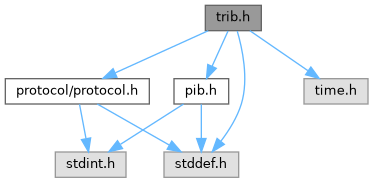
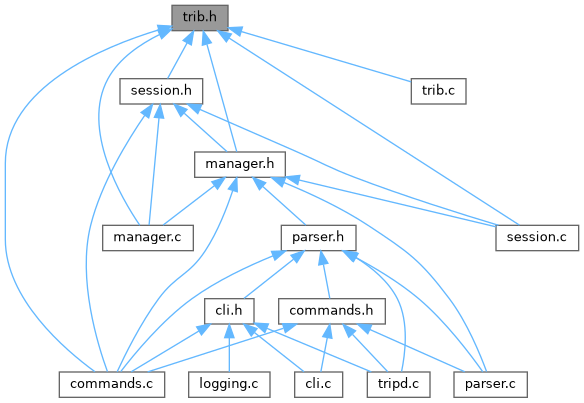
Go to the source code of this file.
Data Structures | |
| struct | entry_attrs_t |
| Groupable attributes that are related to a route. More... | |
| struct | entry_t |
| Route Entry. More... | |
| struct | table_t |
| Route Table. More... | |
| struct | entry_group_t |
| struct | trib_t |
| Telephony Routing Information Base. More... | |
Macros | |
| #define | ATTR_USED_NEXTHOP 0b1 |
| #define | ATTR_USED_ADVERTPATH 0b10 |
| #define | ATTR_USED_ROUTEDPATH 0b100 |
| #define | ATTR_USED_LOCALPREF 0b1000 |
| #define | ATTR_USED_METRIC 0b10000 |
| #define | ATTR_USED_COMMUNITIES 0b100000 |
| #define | ATTR_IS_USED_NEXTHOP(x) |
| #define | ATTR_IS_USED_ADVERTPATH(x) |
| #define | ATTR_IS_USED_ROUTEDPATH(x) |
| #define | ATTR_IS_USED_LOCALPREF(x) |
| #define | ATTR_IS_USED_METRIC(x) |
| #define | ATTR_IS_USED_COMMUNITIES(x) |
Enumerations | |
| enum | entry_type_t { ENTRY_TYPE_TRIP , ENTRY_TYPE_CONNECTED , ENTRY_TYPE_STATIC } |
Functions | |
| entry_t * | entry_clone (const entry_t *entry) |
| Clone entry. | |
| void | entry_destroy (entry_t *entry) |
| Destroy entry. | |
| void | trib_table_deinit (table_t *t) |
| Deinitialize table. | |
| trib_t * | trib_new (uint32_t local_itad) |
| Initialize TRIB structure. | |
| void | trib_adj_pair_add (trib_t *trib, table_t *in, table_t *out) |
| Add and init pair of tables owned by caller. | |
| void | trib_adj_pair_remove (trib_t *trib, table_t *in, table_t *out) |
| void | trib_destroy (trib_t *trib) |
| Deinit TRIB structure. | |
| entry_t ** | trib_table_find (table_t *t, uint16_t af, const char *prefix) |
| Find exact route in table. | |
| const entry_t * | trib_table_lookup (const table_t *table, uint16_t af, uint16_t app_proto, const char *address) |
| Lookup address in table. | |
| void | trib_table_insert (table_t *table, entry_t *route) |
| Add route to table. | |
| void | trib_table_insert_or_replace (table_t *table, entry_t *route) |
| void | trib_table_clear (table_t *table) |
| Destroy all entries and clear table. | |
| void | trib_update_local (trib_t *trib) |
| Update local routes when ITAD is defined. | |
| void | trib_update_adj_out (trib_t *trib, table_t *adj_trib_out) |
| Update an Adj-TRIB-Out. | |
| void | trib_update_full (trib_t *trib) |
| Execute route selection. | |
| size_t | get_new_entries (const table_t *table, entry_t ***new_ents_out) |
| Return array of new entry references to new. | |
| size_t | group_entries_by_attrs (entry_t **entries, size_t entries_size, entry_group_t **groups_out) |
| Group array of entry references by attributes. | |
Variables | |
| const char * | entry_type_strs [] |
Telephony Routing Information Base.
| #define ATTR_IS_USED_ADVERTPATH | ( | x | ) |
| #define ATTR_IS_USED_COMMUNITIES | ( | x | ) |
| #define ATTR_IS_USED_LOCALPREF | ( | x | ) |
| #define ATTR_IS_USED_METRIC | ( | x | ) |
| #define ATTR_IS_USED_NEXTHOP | ( | x | ) |
| #define ATTR_IS_USED_ROUTEDPATH | ( | x | ) |
Return array of new entry references to new.
Allocates array of references and assigns it to new_ents_out
| table | Table with new entries |
| new_ents_out | Where to put entry references |

| size_t group_entries_by_attrs | ( | entry_t ** | entries, |
| size_t | entries_size, | ||
| entry_group_t ** | groups_out ) |
Group array of entry references by attributes.
| entries | Input array |
| entries_size | Input array size |
| groups_out | Output entry reference groups |

Update an Adj-TRIB-Out.
For use when a new peer connets and we have to UPDATE it without triggering a full update


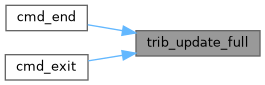
| void trib_update_full | ( | trib_t * | trib | ) |
Execute route selection.
Takes Ext-TRIBs-in and locala routes Updates Ext-TRIB, Loc-TRIB, optimized Loc-TRIB and Ext-TRIBs-out

 1.16.1